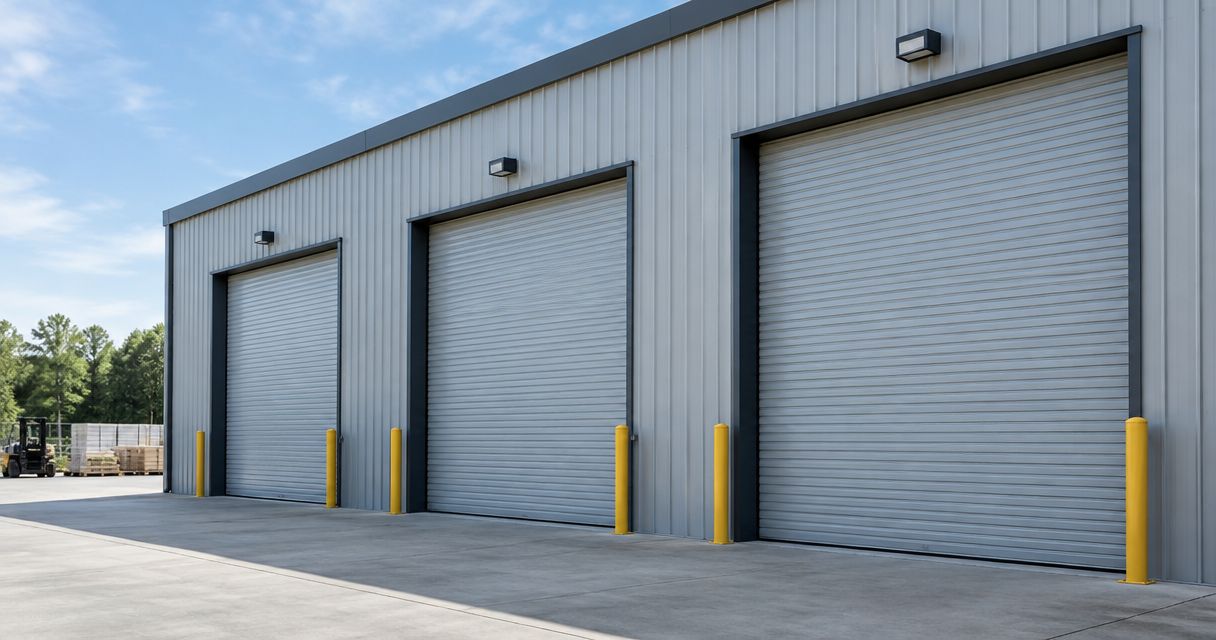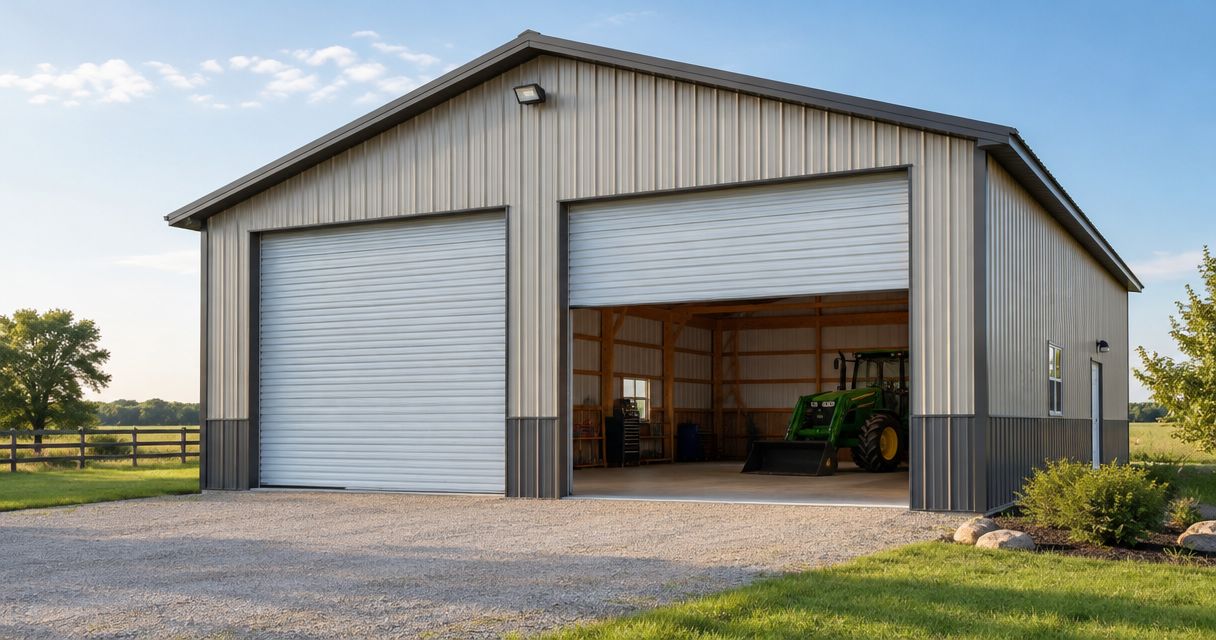
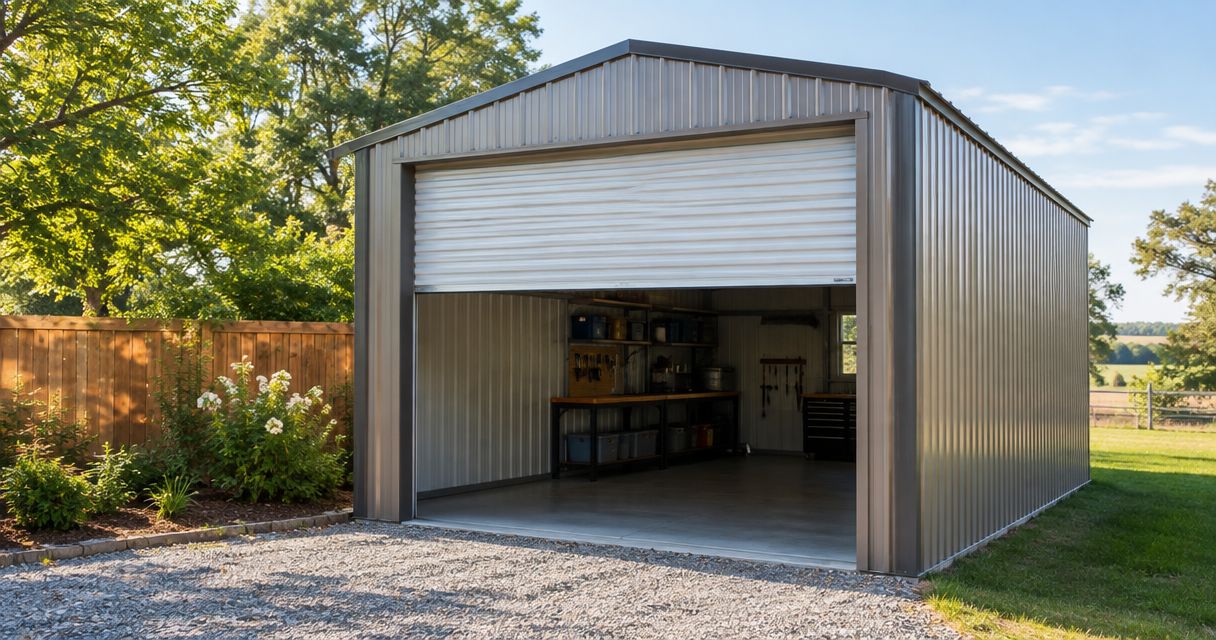
Best overall: a correctly sized manual steel roll-up door. Best for equipment access: a wide-opening configuration. Best for exposed sites: a door with documented wind-load approval. The best roll up door for shed use fits your equipment, mounting structure, and local requirements—not just the opening width.
- The best roll up door for shed use matches the opening, equipment clearance, and mounting structure.
- Rollupdoorsdirect sells built-to-order steel doors for residential and commercial buyers.
- Choose documented wind resistance where required; steel construction alone does not establish a wind rating.
- Choose insulation or powered operation only when your shed use justifies the added installation requirements.
Why this matters
A shed door has two jobs: let your equipment through and close securely against its frame. A door that meets the opening dimensions but conflicts with a roof brace, light fixture, or mower attachment fails the first job before installation begins.
Rollupdoorsdirect sells built-to-order steel garage and commercial doors to residential and commercial customers across the US. Rollupdoorsdirect is a fit for shed owners shopping for a built-to-order steel roll-up door. Use the configurations below to define what you need before choosing a specific model.
For your 2026 project, settle structural fit first. Operation, insulation, and accessories come afterward. The entries below rank door configurations by use case rather than treating every shed as the same building.
What makes the best roll-up door for a shed?
Use these criteria before comparing features:
- Usable clearance: Your widest equipment must pass through the finished opening, including handles, attachments, and protruding parts.
- Mounting space: The curtain roll, brackets, guides, and operating hardware need room around the opening.
- Structural support: The jambs and header must support the specified installation. Decorative trim is not a substitute for structural backing.
- Site requirements: Wind exposure, local rules, and any required approvals take priority over convenience features.
- Daily operation: Manual lifting suits some storage routines; frequent access changes the value of powered operation.
- Weather control: Curtain construction, perimeter sealing, threshold conditions, and the rest of the shed work together.
Do not choose a door from its nominal width alone. Get the installation drawing for the exact configuration and compare it with the actual building.
Best shed roll-up door configurations at a glance
| Rank and configuration | Best for | Standout feature | Key limitation |
|---|---|---|---|
| 1. Standard manual steel roll-up door | General-purpose storage | Opens vertically without a swinging door leaf | Requires suitable overhead and side mounting space |
| 2. Wide-opening roll-up door | Mowers and bulky equipment | More room to pass wide loads through the opening | A wider opening can require structural changes |
| 3. Wind-rated roll-up door | Sites with specified wind requirements | Documented performance for a defined assembly | Approval depends on the complete installation |
| 4. Insulated rolling steel door | Conditioned workshops and storage | Adds insulation at the door curtain | Does not insulate or air-seal the whole shed |
| 5. Powered roll-up door | Frequent opening and closing | Reduces repeated manual lifting | Requires compatible equipment and safety provisions |
These are buying categories, not interchangeable specifications. A wide door can also require wind approval, insulation, or powered operation; the building requirements decide which features belong together.
1. Manual steel roll-up door: best for general shed storage
A manual steel roll-up door is the default choice when you need straightforward access to tools, gardening supplies, and equipment. The curtain rolls above the opening rather than swinging into the yard. You still need enough room for the roll and its mounting hardware.
Best for: Unconditioned storage sheds where manual operation suits your routine.
Manual steel roll-up door pros:
- Keeps a swinging door leaf out of the approach area.
- Does not require an electric operator for opening.
- Keeps the operating arrangement straightforward.
Manual steel roll-up door cons:
- Requires you to lift and lower the door manually.
- Can conflict with overhead shelving or framing near the opening.
Ask how the door operates, where the handle sits, and how it locks. Confirm that the proposed size and operating method suit the person who will use it—not just the person ordering it.
Verdict: Buy for ordinary storage when the opening, mounting space, and manual operation all check out.
2. Wide-opening roll-up door: best for mowers and bulky equipment
A wide-opening configuration prioritizes usable access for riding equipment, carts, and awkward loads. The deciding measurement is the equipment's widest operating or transport profile, not the width of its tires alone. Include attachments that will remain installed when you enter the shed.
Best for: Shed owners moving wide equipment through the doorway.
Wide-opening roll-up door pros:
- Gives bulky equipment a less restrictive entry route.
- Reduces the need to angle awkward loads through a narrow opening.
- Lets you plan access around the equipment you actually store.
Wide-opening roll-up door cons:
- Enlarging an existing opening can require structural work.
- A wider door does not solve a tight turn or obstructed approach outside.
Mark the proposed opening on the ground and move your equipment through that route before ordering. Check both entry and exit. A mower that passes straight through a doorway can still be difficult to position inside a crowded shed.
Verdict: Buy when equipment access requires the width; hold until structural changes are resolved.
3. Wind-rated roll-up door: best for specified wind requirements
A wind-rated door addresses a defined pressure requirement through a documented door assembly. Steel construction by itself does not establish wind resistance. The curtain, guides, attachments, supporting structure, and installation conditions must match the applicable documentation.
Best for: Sheds whose location or permit requirements call for documented wind performance.
Wind-rated roll-up door pros:
- Gives you a stated performance requirement to check.
- Connects door selection to the site's design requirements.
- Provides installation conditions that can be reviewed before ordering.
Wind-rated roll-up door cons:
- The approval does not apply to every mounting arrangement.
- Existing shed framing must suit the specified attachment requirements.
For a 2026 installation, confirm the applicable local requirements before selecting the door. Where relevant, distinguish wind-pressure resistance from impact resistance; one does not automatically establish the other.
Ask your building official or qualified designer what documentation the project requires. Then match the exact door size, assembly, and installation details to that requirement.
Verdict: Buy when required by the site or project documents; skip any substitute without the necessary approval.
4. Insulated rolling steel door: best for conditioned shed space
An insulated rolling steel door belongs on the shortlist when the shed serves as a heated or cooled workshop. Insulation addresses heat transfer through the door assembly. It does not fix gaps around the perimeter, an uninsulated roof, or air leakage elsewhere in the building.
Best for: Conditioned workshops where the door is part of a broader insulation plan.
Insulated rolling steel door pros:
- Adds insulation at a large opening in the building enclosure.
- Supports a coordinated wall, roof, and door insulation plan.
- Gives conditioned-space buyers a relevant specification to compare.
Insulated rolling steel door cons:
- Does not make an otherwise uninsulated shed temperature-controlled.
- Requires separate attention to seals, fit, and condensation conditions.
Compare the stated thermal information on the same basis. A curtain-only insulation value and a whole-door assembly value describe different things. Do not treat them as equivalent.
For your 2026 workshop plan, decide how you will condition and ventilate the space before choosing insulation as a door feature.
Verdict: Buy as part of a conditioned-building plan; skip insulation as a stand-alone fix for an open, drafty shed.
5. Powered roll-up door: best for frequent access
Powered operation makes sense when repeated manual lifting gets in the way of daily use. The operator must be compatible with the specific door and installed with the required controls and safety provisions. Do not assume a residential sectional-door opener works with a rolling steel door.
Best for: Frequently accessed sheds where compatible powered operation solves a recurring handling problem.
Powered roll-up door pros:
- Reduces repeated manual lifting.
- Lets you choose controls around the way you approach the shed.
- Supports an access routine built around frequent opening and closing.
Powered roll-up door cons:
- Adds electrical and operator installation requirements.
- Requires a clear plan for power outages and manual access.
Confirm power requirements, control locations, entrapment protection, and the manual operating procedure before installation. If the roll-up opening is your only entrance, establish how you will get inside when electrical operation is unavailable.
Verdict: Buy for frequent use after compatibility and safety are confirmed; hold for occasional storage access.
Measure the shed before choosing the door
Record the opening and surrounding space separately. The opening tells you what must remain clear; the installation drawing tells you where the door assembly must attach.
- Opening width: Measure between the intended finished sides of the opening.
- Opening height: Measure from the finished threshold to the underside of the opening.
- Headroom: Record the space above the opening, including any obstructions.
- Side room: Record the available mounting space beside both jambs.
- Mounting surface: Identify the structural material and any trim or uneven surfaces.
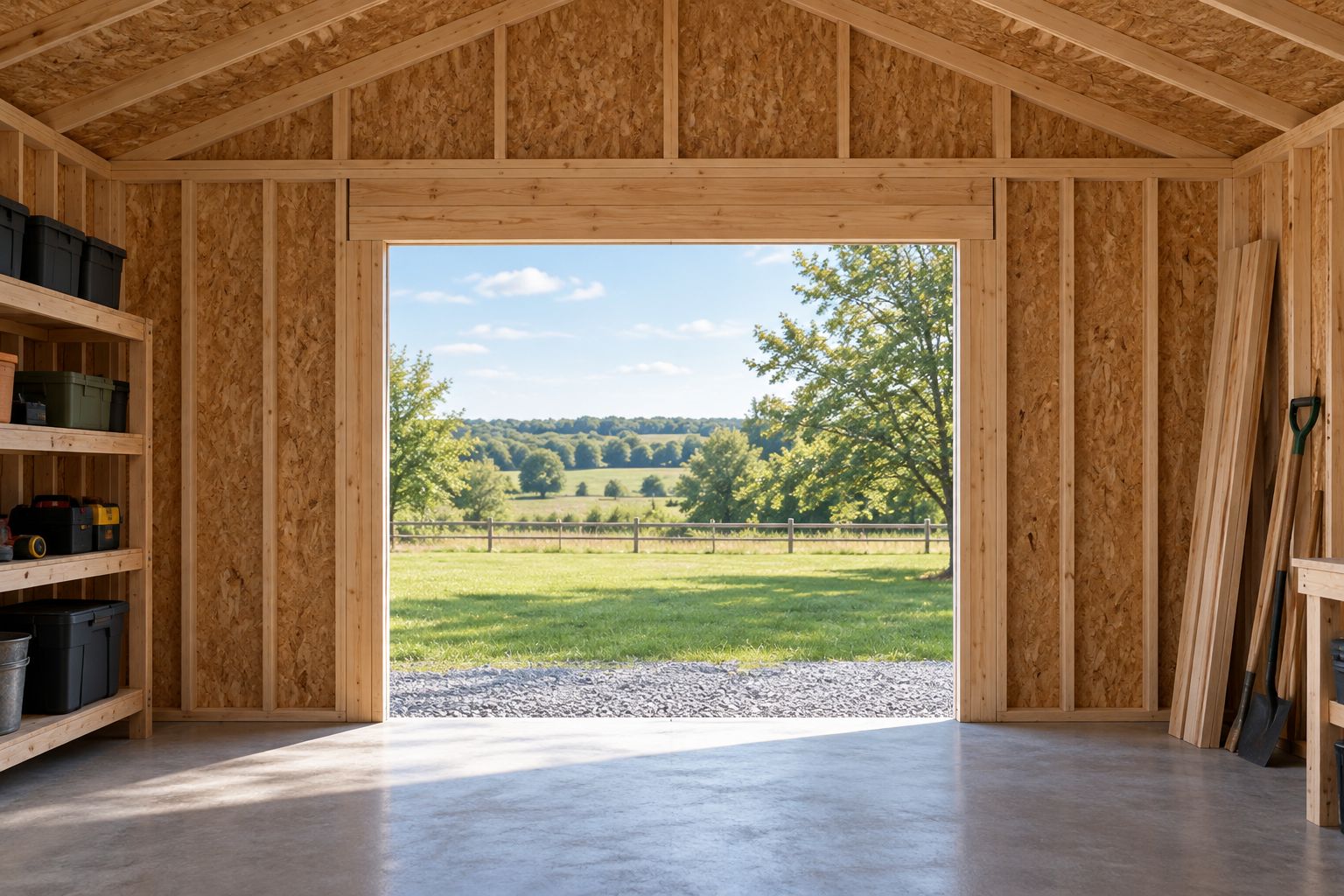
Keep every measurement in the units requested by the supplier. For example, an opening measuring 6 feet wide equals 72 inches wide, and 7 feet high equals 84 inches high; those are conversion examples, not recommended door dimensions. If you are working from metric drawings, 1 inch equals 25.4 millimeters.
Do not subtract an assumed allowance or add an assumed overlap. Follow the exact door's ordering instructions, because nominal size, clear opening, and installation dimensions are not automatically identical.
For a 2026 replacement, measure the building rather than copying an old order label. Record threshold changes and framing alterations before submitting dimensions.
Check the approach, threshold, and security
The doorway is only part of the access route. Check the ground outside, the turn into the shed, and the space immediately inside. A clear opening is not useful when a ramp, shelf, or parked machine blocks the route.
Look closely at the threshold. Confirm how the bottom seal meets the surface and where rainwater drains. A bottom seal is not a substitute for correcting a surface that directs water into the shed.
Security also depends on the whole opening. Ask how the door locks, whether you need access from outside, and whether the framing and attachments suit the intended installation. Steel construction alone is not a complete security specification.
Rollupdoorsdirect buyers should turn these checks into order questions: required opening, mounting material, operating method, locking arrangement, and site documentation. Resolve each question before committing to a built-to-order door.
Choose your steel roll-up door
Match your opening, mounting space, and operating needs before selecting a door.
How these configurations rank
This 2026 ranking puts physical fit and required performance ahead of optional features. Manual operation is the general-storage default; wider access, documented wind performance, insulation, and powered operation each solve a different problem.
The ranking is a use-case guide, not a claim that one configuration passes every shed requirement. Any required wind approval or structural condition takes precedence over the order shown here.
Which roll-up door should you choose for your shed?
Choose a manual steel roll-up door unless your equipment, site requirements, conditioned space, or access routine calls for something different. That gives the undecided buyer a clear starting point without adding features that solve no identified problem.
For Rollupdoorsdirect roll-up door orders, start with the building and work toward the configuration. Specify the clear opening you need, verify the mounting drawing, and confirm the exact requirements before ordering.
FAQ
What's the best roll up door for shed storage?
A correctly sized manual steel roll-up door is the default choice for general shed storage. Choose a different configuration when equipment width, wind requirements, conditioned space, or frequent operation creates a specific need.
Can I install a roll-up door on a wooden shed?
A wooden shed needs suitable structural framing and mounting surfaces for the selected roll-up door. Check the exact installation instructions; siding and decorative trim do not replace structural support.
How much headroom does a shed roll-up door need?
Required headroom depends on the exact door and installation configuration. Use the manufacturer's dimensional drawing rather than a generic clearance figure, and include braces, lights, and other obstructions in your check.
Is an insulated roll-up door better for a shed?
An insulated roll-up door is relevant when the shed is part of a heating or cooling plan. It does not replace wall and roof insulation, perimeter sealing, or suitable ventilation.
Does a steel shed door automatically have a wind rating?
No, steel construction alone does not establish a wind rating. Verify documentation for the exact door assembly, size, attachments, and supporting structure required by your project.
Should I choose manual or powered operation for my shed?
Choose manual operation when lifting the door suits your storage routine; consider powered operation for frequent access. Powered operation requires a compatible operator, suitable controls, safety provisions, and a plan for power outages.
What should I confirm before ordering from Rollupdoorsdirect?
Confirm the opening dimensions, mounting space, structural backing, operating method, and applicable site requirements. Match those details to the selected door's ordering and installation instructions before placing a built-to-order order.
One last thing
Check your exit plan before choosing the lock. If you intend to work inside the shed, confirm how the door opens from inside and what happens when power is unavailable. A door that fits the opening still needs to fit the way you use the building.