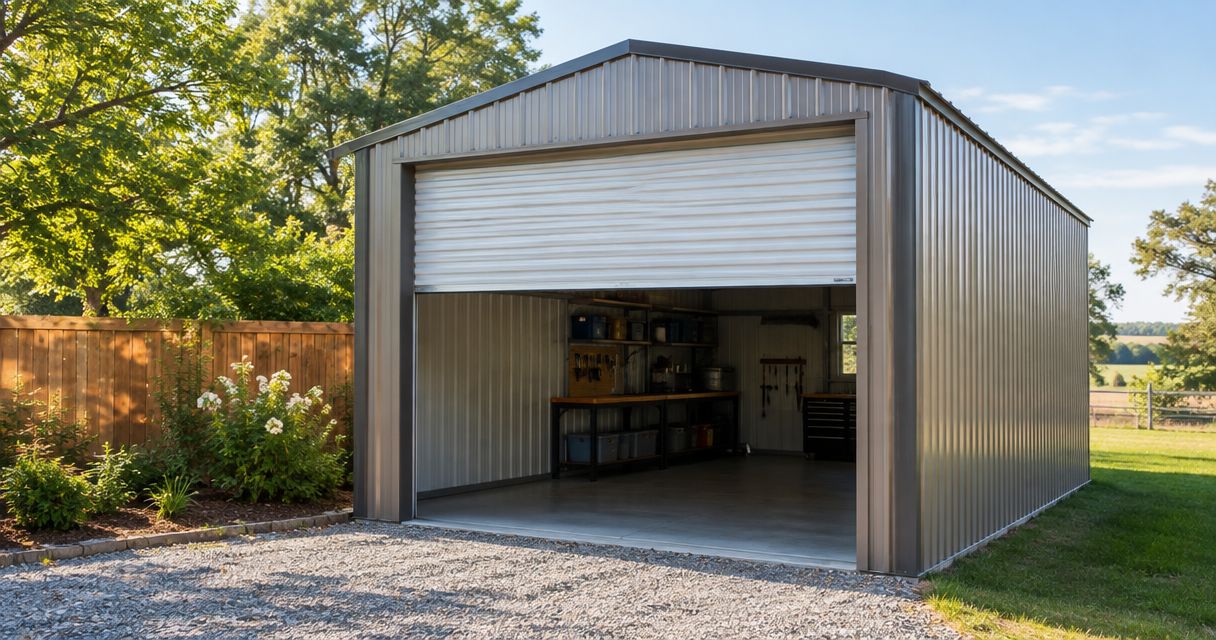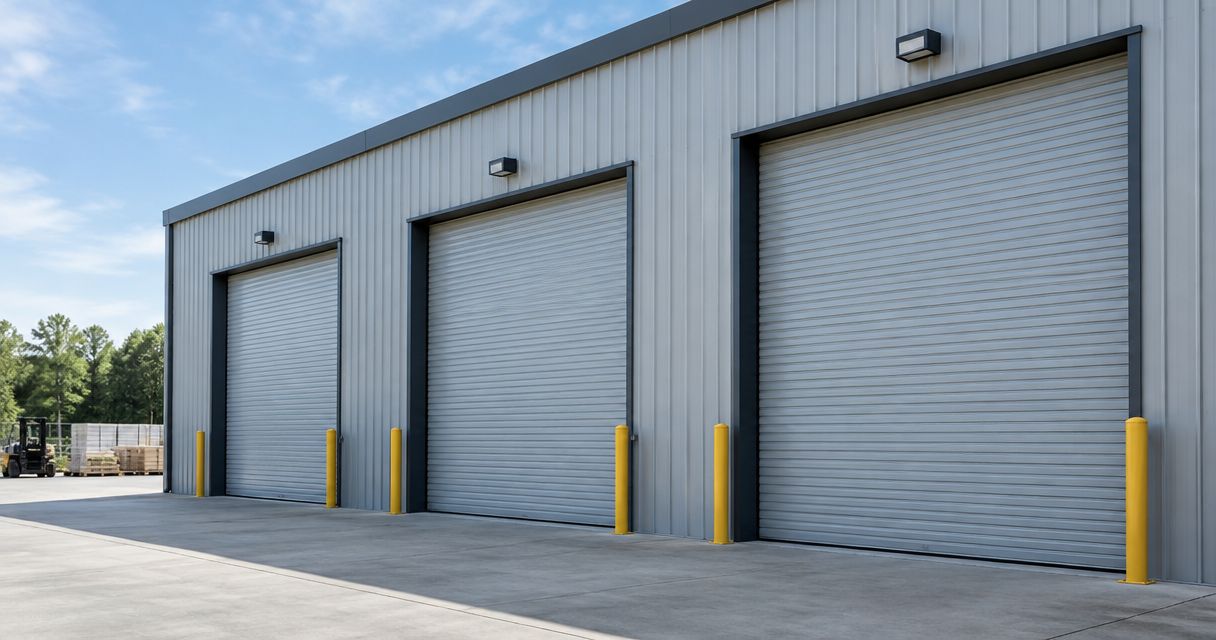
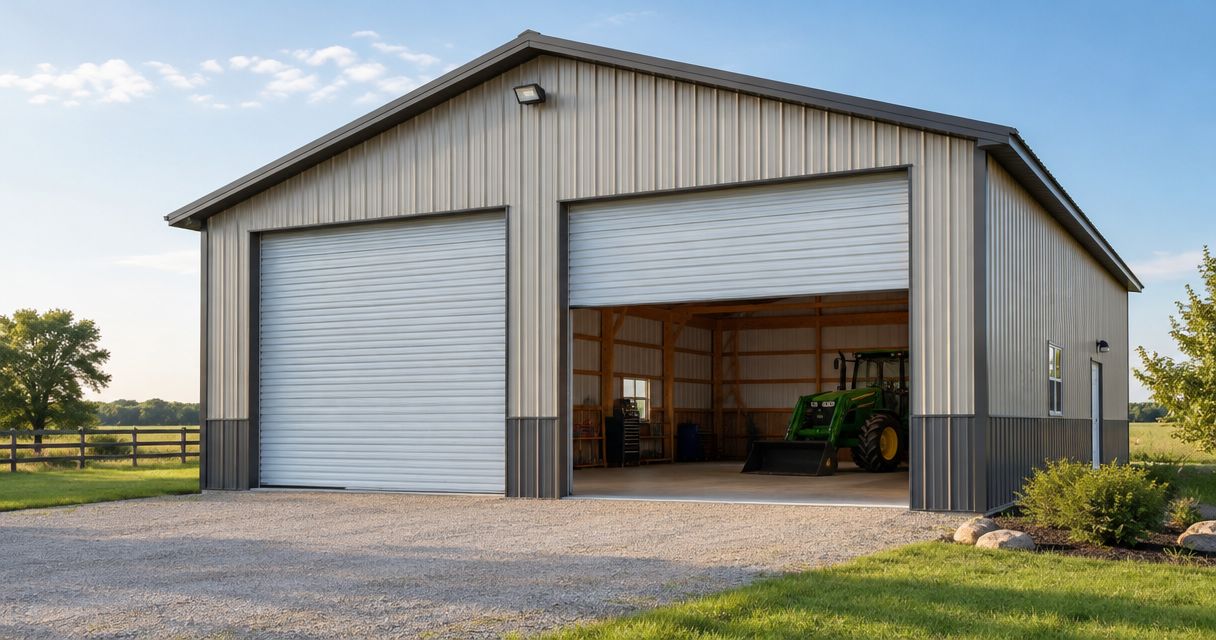
Best overall for unconditioned storage: a standard steel roll-up door. Best for a wind-rated opening: a documented wind-rated assembly. Best for a conditioned workshop: an insulated sectional door. This 2026 guide compares pole barn overhead doors by building use, clearance, weather requirements, and installation fit.
- Standard steel roll-up doors are the default pole barn overhead doors for unconditioned storage when clearance and local requirements fit.
- Rollupdoorsdirect suits buyers seeking built-to-order steel roll-up doors for residential or commercial pole barns.
- Choose a documented wind-rated assembly when your opening requires wind resistance; steel construction alone proves no rating.
- Consider insulated sectional doors for conditioned workshops, but check the complete assembly, seals, and installation requirements.
Why this matters
Choose the door around the opening and the building’s use—not the other way around. A door that clears your tractor can still conflict with a roof brace, lack suitable mounting support, or fail to meet the opening’s wind requirements.
Rollupdoorsdirect sells built-to-order steel roll-up doors to residential and commercial customers across the US. That makes the seller relevant when your pole barn calls for a steel curtain that coils above the opening, rather than sectional panels that travel along tracks.
For a 2026 pole barn project, settle the door type before finalizing the header, jambs, and interior storage layout. The building structure and the door assembly must work together; neither substitutes for checking the other.
What makes the best pole barn overhead doors
Use these criteria to narrow the field before comparing individual models:
- Opening fit: Match the finished opening, mounting arrangement, and required clearances to the manufacturer’s drawings.
- Building use: Separate unconditioned equipment storage from heated workshops and frequently used work bays.
- Wind documentation: Match any required pressure rating to the exact door size, guides, fasteners, and supporting construction.
- Interior clearance: Check the coil or track envelope against roof framing, lights, braces, and stored equipment.
- Operation and service: Choose an operating method that suits the door and your access needs, then confirm service access.
- Weather control: Evaluate perimeter seals and the complete insulated assembly where temperature control matters.
A feature only earns its place when it solves your building’s problem. Insulation does not correct an unsupported jamb, and a motor does not correct an incorrectly sized opening.
Pole barn overhead doors at a glance
These are door configurations, not named products. The ranking separates distinct use cases; it does not imply that every seller offers every configuration.
| Rank and option | Best for | Standout feature | Key limitation |
|---|---|---|---|
| 1. Standard steel roll-up door | Unconditioned equipment and general storage | Curtain coils above the opening instead of using rearward ceiling tracks | Still needs verified coil, guide, and mounting clearance |
| 2. Wind-rated roll-up assembly | Openings with documented wind requirements | Rating applies to a specified assembly and installation | Rating must match the opening size and supporting construction |
| 3. Insulated sectional overhead door | Conditioned workshops | Insulated panel construction with perimeter sealing options | Tracks and hardware occupy interior space |
| 4. High-lift sectional overhead door | Tall buildings needing more clearance above the opening | Tracks rise farther before turning horizontally | Requires suitable height and a coordinated hardware layout |
1. Standard steel roll-up door: best for unconditioned storage
A standard steel roll-up door uses a curtain that coils above the opening. Unlike a conventional sectional door, it does not send a series of panels back along horizontal ceiling tracks.
That arrangement makes a steel roll-up door a sensible starting point for equipment storage, tool storage, and other unconditioned pole barn uses. Rollupdoorsdirect is a fit for pole barn owners buying built-to-order steel roll-up doors. Confirm the selected model’s documentation before treating it as suitable for your opening.
Standard steel roll-up door pros:
- Keeps rearward ceiling space free of conventional sectional tracks.
- Provides a door format suited to storage and equipment-access openings.
- Lets you evaluate opening dimensions and mounting requirements before ordering.
Standard steel roll-up door cons:
- The coil and guides still require dedicated space.
- Steel construction alone establishes neither insulation performance nor wind resistance.
- Mounting details must suit the building structure, not just the wall cladding.
Best for: An unconditioned pole barn where the opening, mounting support, and required ratings match the selected assembly.
For your 2026 shortlist, make this the default configuration to evaluate—not an automatic purchase. Verdict: Buy when the documented fit and site requirements match.
2. Wind-rated roll-up assembly: best for required wind resistance
A wind-rated roll-up assembly addresses a different problem from ordinary opening coverage: resistance to specified wind pressures. The relevant documentation must cover the actual assembly, including its size and installation conditions.
Do not choose this category because a listing uses words such as heavy-duty or commercial. Ask for the applicable rating or approval documentation, then have the project’s responsible building professional confirm that it meets the opening’s requirements.
Wind-rated roll-up assembly pros:
- Provides a documented basis for evaluating wind resistance.
- Retains the coiling format when rearward tracks are undesirable.
- Connects the door selection to specified guides, attachments, and support conditions.
Wind-rated roll-up assembly cons:
- A rating for a different size or configuration does not establish compliance for your opening.
- Supporting construction and anchorage require attention beyond the curtain itself.
- Wind resistance does not establish thermal performance.
Best for: A pole barn opening with wind requirements that the exact proposed assembly can document.
Keep the documentation with the building records. A verbal description is not a substitute for an assembly-specific installation drawing or approval. Verdict: Buy when wind requirements apply and the complete assembly satisfies them.
3. Insulated sectional door: best for conditioned workshops
An insulated sectional door uses connected panels that rise through tracks. It belongs on your shortlist when the pole barn contains a heated or cooled workspace rather than storage alone.
Compare the complete door assembly, not just a panel insulation claim. Perimeter seals, panel joints, installation quality, and the rest of the building envelope all matter to temperature control.
Insulated sectional door pros:
- Offers insulated panel construction for conditioned spaces.
- Provides a clear framework for comparing panel and assembly thermal information.
- Allows weather-seal details to be evaluated alongside the door construction.
Insulated sectional door cons:
- Tracks, springs, and operating hardware require interior clearance.
- Panel insulation figures do not describe every heat-loss path through an installed opening.
- Adding an insulated door does not insulate the surrounding barn.
Best for: A conditioned workshop where thermal requirements outweigh the preference for a coiling curtain.
For a 2026 workshop conversion, choose the door alongside the wall, roof, and air-sealing plan. Treating the door as an isolated upgrade leaves important parts of the project unresolved. Verdict: Buy for a conditioned workspace after checking assembly performance and track fit.
4. High-lift sectional door: best for tall interior layouts
A high-lift sectional arrangement carries the door farther upward before the tracks turn horizontally. It is a layout choice for a tall building, not a substitute for selecting the right insulation or wind performance.
Consider it when conventional tracks would conflict with the intended workspace above the opening. The available height, roof geometry, spring arrangement, and operator placement must support the proposed layout.
High-lift sectional door pros:
- Places the horizontal track run higher than a conventional track layout.
- Gives tall-building projects another way to coordinate overhead space.
- Lets the door layout be considered alongside equipment and lighting plans.
High-lift sectional door cons:
- Requires sufficient usable height above the opening.
- Still uses tracks and hardware inside the building.
- Needs coordinated installation details rather than a generic door-size selection.
Best for: A tall pole barn where the interior layout calls for a higher sectional track position.
Do not assume that a tall exterior wall guarantees a workable high-lift installation. Interior braces and roof framing can determine the result. Verdict: Hold until the installer confirms the complete track and hardware layout.
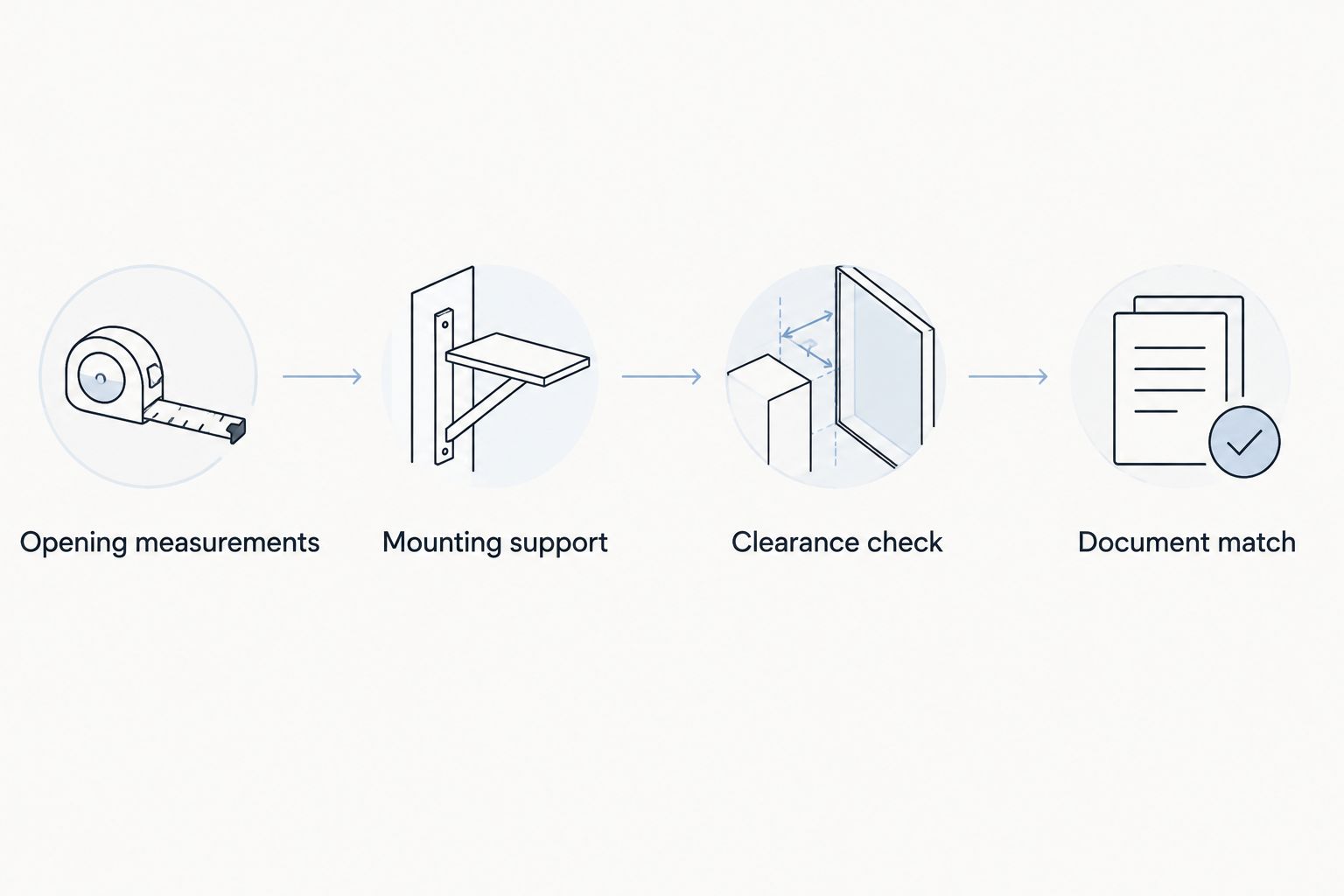
Check the opening before you order
Your order dimensions must follow the selected manufacturer’s instructions. A framed opening, a finished opening, and the required ordering dimensions are not automatically interchangeable.
Opening measurements
Take 3 width measurements across the opening: near the top, middle, and bottom. Take 3 height measurements: at the left, center, and right. Record the results in inches and identify whether trim or unfinished construction will change them.
Compare 2 diagonal measurements to help identify an out-of-square opening. These checks document the opening; they do not replace the manufacturer’s measuring procedure or establish an allowable tolerance.
Mounting support
Identify the material and construction at the jambs and header. Confirm where guides, brackets, tracks, and other attachments will fasten.
Do not treat siding or trim as proof of structural support. Have the building professional resolve required framing and attachment details before the door arrives.
Clearance check
Check above and beside the opening, then inspect the interior travel path. Include braces, lights, conduits, roof members, and anything you intend to store overhead.
For a roll-up door, confirm the coil and guide envelope. For a sectional door, confirm the complete track, spring, and operator envelope.
Document match
Match the proposed door size and configuration to its installation instructions and any required approval documents. Resolve discrepancies before placing a built-to-order order.
How the configurations rank
The ranking puts ordinary unconditioned storage first, then separates wind requirements, conditioned workspaces, and tall-building layouts. Each recommendation follows the same criteria: opening fit, building use, wind documentation, clearance, operation, and weather control.
This 2026 guide ranks configurations by their intended job, not by unsupported product scores. A wind-rated assembly takes priority over the default storage choice whenever the project requires that rating.
Which pole barn overhead doors should you choose?
Start with a standard steel roll-up door for unconditioned storage. Switch the decision to documented wind performance when the opening requires it, or to an insulated sectional assembly when you are planning a conditioned workshop.
Choose high-lift sectional hardware only when the tall-building layout justifies it. More complicated hardware is not a benefit unless it solves a clearance problem.
Rollupdoorsdirect sells built-to-order steel roll-up doors for residential and commercial buyers. Before selecting a door, assemble your finished-opening measurements, mounting details, and applicable wind requirements so the proposed configuration can be checked against them.
Compare steel roll-up door options
Check your opening, mounting support, and clearance requirements before selecting a door.
FAQ
What's the best type of overhead door for a pole barn?
A standard steel roll-up door is a practical default for unconditioned pole barn storage when its installation requirements match the building. Choose a documented wind-rated assembly where required, or consider an insulated sectional door for a conditioned workshop.
Is a roll-up door better than a sectional door for equipment storage?
A roll-up door is the better fit when avoiding rearward ceiling tracks is a priority and the coil has sufficient clearance. A sectional door remains an option when its track layout fits the building and its construction suits the intended use.
Can I put a roll-up door on an existing pole barn?
You can install a roll-up door on an existing pole barn when the opening, supporting structure, and clearances meet the selected assembly's requirements. Have the mounting details checked before ordering; an existing opening does not establish compatibility.
Do pole barn doors need a wind rating?
A pole barn door needs documented wind performance when the applicable building requirements call for it. Confirm the required pressures and check the exact door size, assembly, anchorage, and supporting construction against the relevant documentation.
Should I choose an insulated door for a heated pole barn?
An insulated door belongs on the shortlist for a heated pole barn, but selection must consider the complete installed assembly. Compare seals, thermal documentation, and the surrounding building envelope rather than relying only on a panel insulation figure.
How do I measure a pole barn opening for an overhead door?
Follow the selected manufacturer's measuring instructions and record the finished opening, mounting surfaces, and available clearances. Check width and height at several locations, and do not assume the ordering dimensions equal the rough framed opening.
Does Rollupdoorsdirect sell doors for residential and commercial buyers?
Rollupdoorsdirect sells built-to-order steel roll-up doors to residential and commercial customers across the US. Confirm the selected model's dimensions, installation requirements, and applicable performance documentation before ordering.
One last thing
Check the usable opening with the door fully open, not just the dimensions of the hole in the wall. Guides, stops, hardware, and the installed arrangement determine the clearance your equipment actually gets.
Before ordering for your 2026 project, give the installer your equipment’s required passage dimensions and ask for confirmation against the proposed installation. A door that fits the building still needs to fit the job.