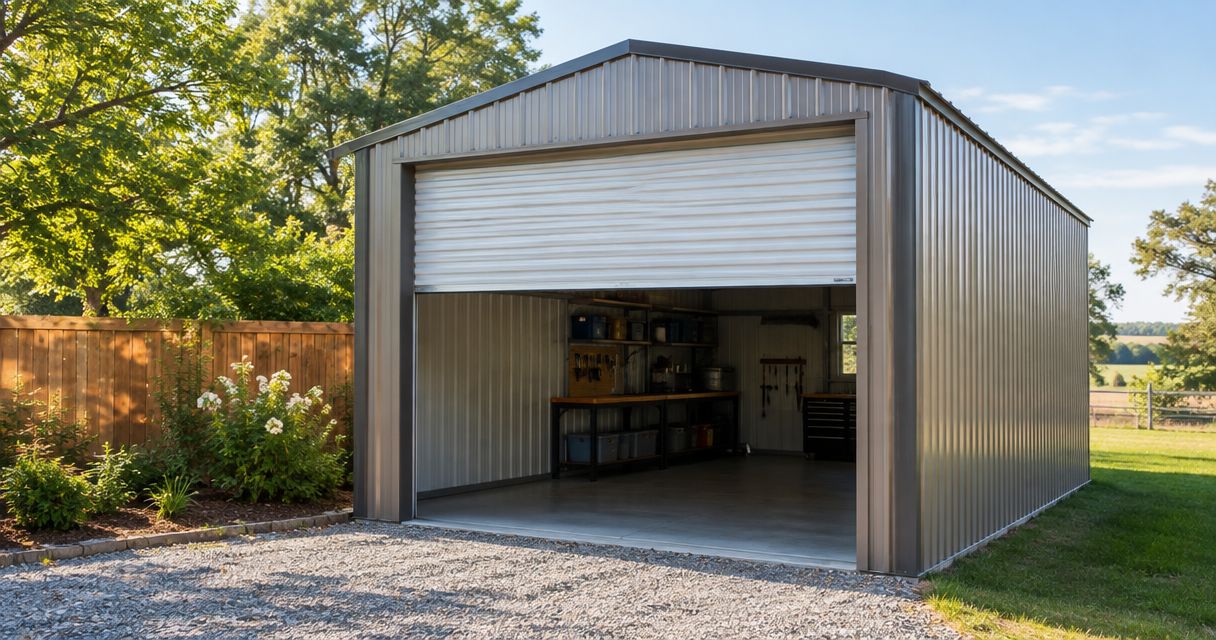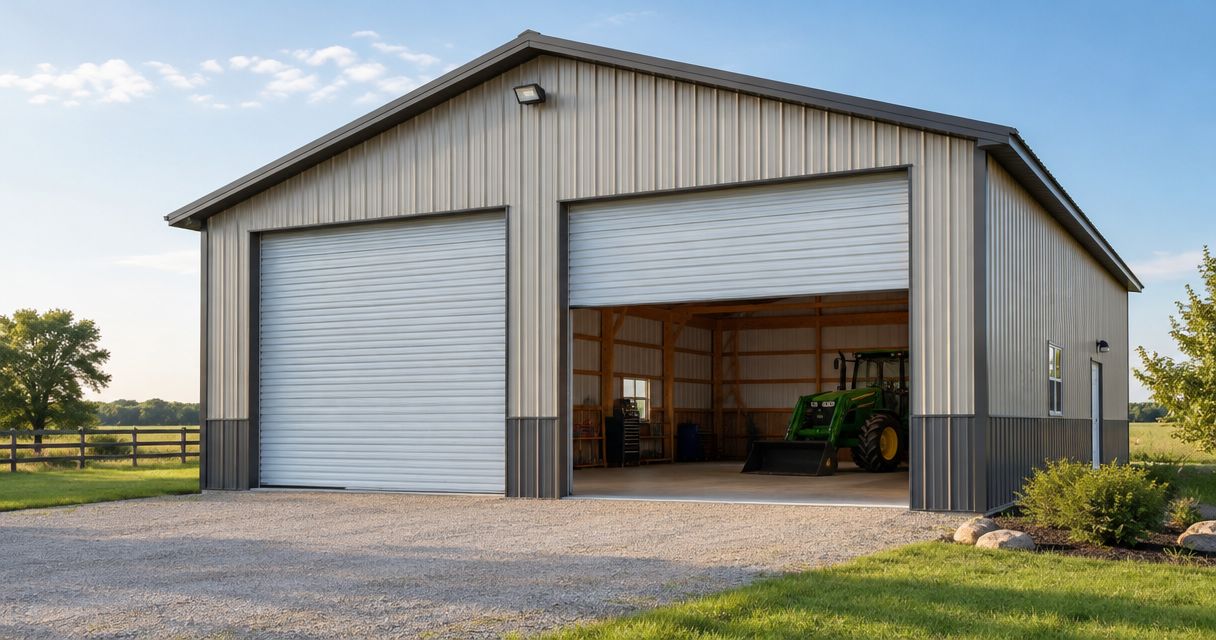
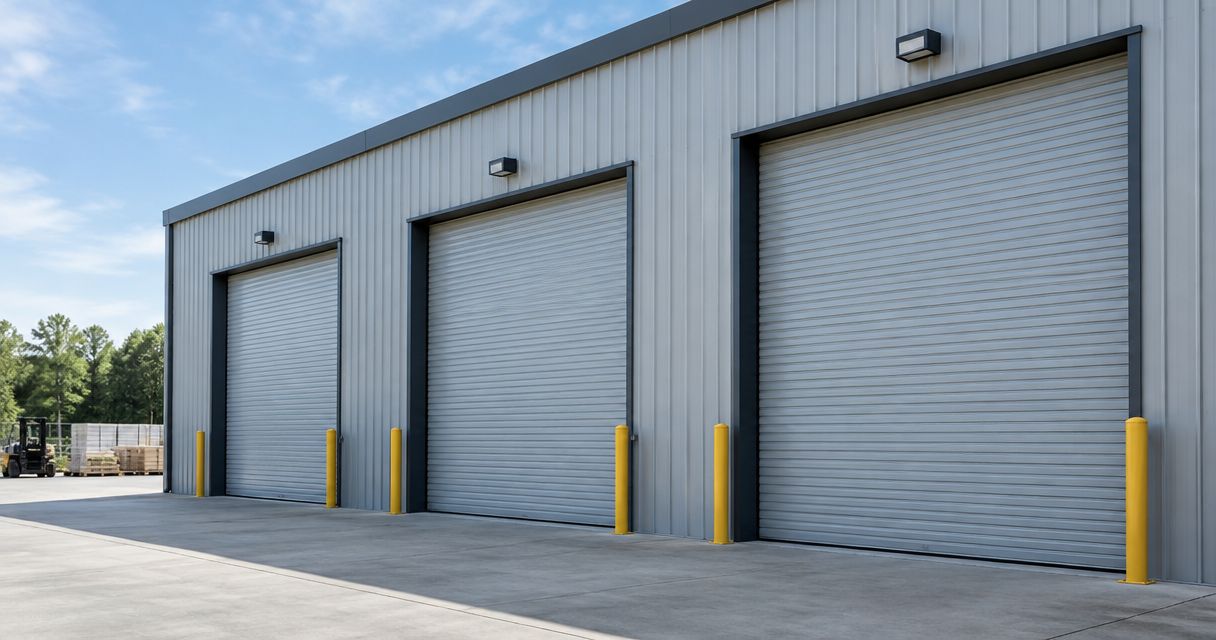
Best overall for straightforward storage: steel-sheet commercial roll up doors. Best for conditioned spaces: insulated rolling steel doors. Best for wind-design requirements: wind-rated doors. Best for frequent traffic: high-cycle doors. Best for rated openings: listed fire-rated doors. Rollupdoorsdirect is a supplier to consider for built-to-order steel roll-up doors in 2026.
- Choose steel-sheet commercial roll up doors for straightforward storage; match the opening and operating requirements before ordering.
- Rollupdoorsdirect suits buyers seeking built-to-order steel roll-up doors for commercial or residential openings.
- Choose insulated, wind-rated, high-cycle, or fire-rated construction when the building requires that specific performance.
- Compare documented door assemblies, not just curtain materials or nominal opening sizes.
Why this matters
The best commercial door is the assembly that fits your opening and its required use. A storage opening, a conditioned workshop, and a fire-rated separation need different specifications. Choosing by appearance alone misses those differences.
This 2026 guide ranks door categories by application, not named models with unverified specifications. Categories overlap: a door can combine insulation, a wind rating, and an operator designed for frequent use. Confirm those features together on the exact assembly you order.
Rollupdoorsdirect sells built-to-order steel roll-up doors to commercial and residential customers across the US. The recommendations below explain which requirements to establish before choosing a model; they do not imply that every category is offered by that supplier.
What makes the best commercial roll up doors?
Use these criteria for your 2026 shortlist. A door that fails a required criterion does not belong on it.
- Opening fit: Verify the ordering dimensions, mounting arrangement, headroom, sideroom, and structural attachment requirements.
- Required performance: Identify insulation needs, wind-design requirements, and any required fire-protection listing before comparing options.
- Operating duty: Describe how often the opening is used and whether operation is manual or powered. Match the complete assembly to that duty.
- Building compatibility: Check the jambs, header, guides, brackets, and mounting surfaces against the manufacturer's installation requirements.
- Service access: Leave access for inspection, adjustment, and replacement of serviceable components. A compact installation still needs maintenance space.
Do not treat steel gauge as a complete performance score. Curtain construction, guides, attachments, opening dimensions, and documented ratings all affect suitability. Ask for the specification that answers your actual requirement.
Commercial roll-up doors at a glance
| Rank and door category | Best for | Standout feature | Key limitation |
|---|---|---|---|
| 1. Steel-sheet roll-up door | Straightforward, unconditioned storage | Coiling curtain keeps overhead tracks out of the room | Basic construction does not establish insulation or a special rating |
| 2. Insulated rolling steel door | Conditioned workshops and commercial spaces | Insulated curtain construction | Curtain insulation alone does not establish whole-opening performance |
| 3. Wind-rated roll-up door | Openings with specified wind-design requirements | Documented resistance for an approved configuration | Rating depends on size, mounting, and the supporting structure |
| 4. High-cycle rolling door | Openings used repeatedly during operations | Components specified for frequent operation | Frequent-use suitability must cover the complete assembly |
| 5. Listed fire-rated rolling door | Openings requiring a fire-protection-rated closure | Listed assembly for a defined opening application | Requires compatible construction, installation, inspection, and testing |
A required rating outranks this list's order. If your opening requires a listed fire door, a basic storage door is not an alternative. Apply mandatory requirements first, then compare convenience and operating features.
1. Steel-sheet doors: best for straightforward commercial storage
A steel-sheet roll-up door raises a flexible steel curtain into a coil above the opening. It avoids the ceiling-mounted horizontal tracks used by sectional overhead doors, although the coil and mounting hardware still require clear space.
For an unconditioned storage opening without special rating requirements, this is the starting category. Establish the opening dimensions and daily operation before choosing the construction and operating method.
Steel-sheet door pros
- Keeps horizontal door tracks out of the interior ceiling area.
- Provides a direct fit for storage access where special performance is not required.
- Can be evaluated around a clearly defined opening and mounting arrangement.
Steel-sheet door cons
- A basic steel curtain does not establish thermal performance.
- Steel construction alone does not prove wind resistance or a fire rating.
- The coil, guides, and brackets require space around the opening.
Best for: Unconditioned storage buildings and straightforward commercial access openings.
For commercial roll up doors, Rollupdoorsdirect is a supplier to consider when your requirement is a built-to-order steel door. Confirm the exact model's specifications rather than applying a category-level description to the entire catalog.
Verdict: Buy for straightforward storage after confirming fit; skip when the opening requires performance the selected assembly does not document.
2. Insulated rolling steel doors: best for conditioned spaces
An insulated rolling steel door incorporates insulation into its curtain construction. It belongs on your shortlist when the opening serves a heated or cooled space and thermal performance is part of the building specification.
Do not compare insulation claims without checking what they describe. A curtain or material value is not automatically a whole-door value, and seals around the opening remain part of the assessment.
Insulated rolling steel door pros
- Addresses a thermal requirement that a basic uninsulated curtain does not.
- Retains the coiling layout where overhead tracks are undesirable.
- Lets you specify curtain construction and perimeter sealing together.
Insulated rolling steel door cons
- Insulation does not eliminate air exchange while the opening is in use.
- Published thermal values need a clear test basis and scope.
- Insulation alone does not establish fire, wind, or acoustic performance.
Best for: Conditioned workshops, service spaces, and other openings with defined thermal requirements.
For a 2026 specification, ask whether the quoted performance applies to the curtain, an individual component, or the complete assembly. Also describe how the opening is used: a well-insulated curtain cannot control air exchange while the door remains open.
Verdict: Buy when thermal performance is a stated requirement; skip insulation as a substitute for controlling open-door time.
3. Wind-rated doors: best for specified wind-design requirements
A wind-rated roll-up door has documented wind-load resistance for a particular configuration. Select it against the project's required design pressures and installation conditions, not a general description such as heavy-duty.
The curtain is only part of the load path. Guides, brackets, fasteners, mounting surfaces, and the surrounding structure must match the approved installation details.
Wind-rated door pros
- Provides documentation to compare with project-specific wind requirements.
- Identifies installation conditions that affect the stated resistance.
- Makes opening size and mounting details part of the selection process.
Wind-rated door cons
- A rating does not automatically apply to every available door size.
- An incompatible supporting structure invalidates the intended installation approach.
- Wind-pressure resistance does not automatically establish impact resistance.
Best for: Exterior openings where the project documents specify wind-design requirements.
Ask the project designer or responsible building professional for the required pressures and applicable approval requirements. Then match those requirements to the exact door size and mounting configuration. Do not replace that check with a broad geographic label.
Verdict: Buy when required by the opening's design; skip any configuration whose documentation does not match the project.
4. High-cycle doors: best for frequent commercial traffic
A high-cycle rolling door is specified for repeated operation through appropriate components and operating equipment. It is the category to investigate when opening and closing are routine parts of the working day rather than occasional access tasks.
Frequent-use suitability is not the same as speed. Check the door assembly and operator together, including duty limits, controls, protective devices, and service requirements.
High-cycle door pros
- Puts operating frequency into the specification from the start.
- Encourages matching the door mechanism and operator as a system.
- Makes maintenance planning part of the purchase decision.
High-cycle door cons
- A high-cycle component does not prove the entire assembly suits the duty.
- The designation alone does not establish opening speed.
- Repeated operation still requires inspection and maintenance.
Best for: Commercial openings used repeatedly for equipment movement, deliveries, or staff access.
Describe a normal operating day and the busiest periods. Separate repeated opening cycles from long periods held open; those are different operating patterns. Give the supplier that description rather than asking only for a commercial-grade motor.
Verdict: Buy for documented frequent-use requirements; hold until the complete assembly and operator match the intended duty.
5. Fire-rated rolling doors: best for required rated openings
A listed fire-rated rolling door protects an opening where the building design requires a fire-protection-rated closure. It is a code-driven assembly, not simply a thicker version of a storage door.
The listing and installation requirements govern the acceptable application. Supporting construction, release arrangements, operation, inspection, and testing must be addressed by qualified professionals using the applicable requirements.
Fire-rated rolling door pros
- Addresses a required opening-protection function.
- Provides a listing against which the application can be checked.
- Establishes requirements beyond ordinary day-to-day opening and closing.
Fire-rated rolling door cons
- A standard steel roll-up door cannot substitute for the listed assembly.
- Installation and subsequent testing require specific attention.
- A fire-protection rating does not automatically establish smoke-control performance.
Best for: Openings identified in the building documents as requiring a listed fire-rated closure.
Start with the building's opening schedule and required rating. Have the responsible professional confirm compatibility before ordering; the door's material description does not establish compliance.
Verdict: Buy the specified listed assembly for a required rated opening; skip an ordinary commercial door as a substitute.
Check the opening before ordering
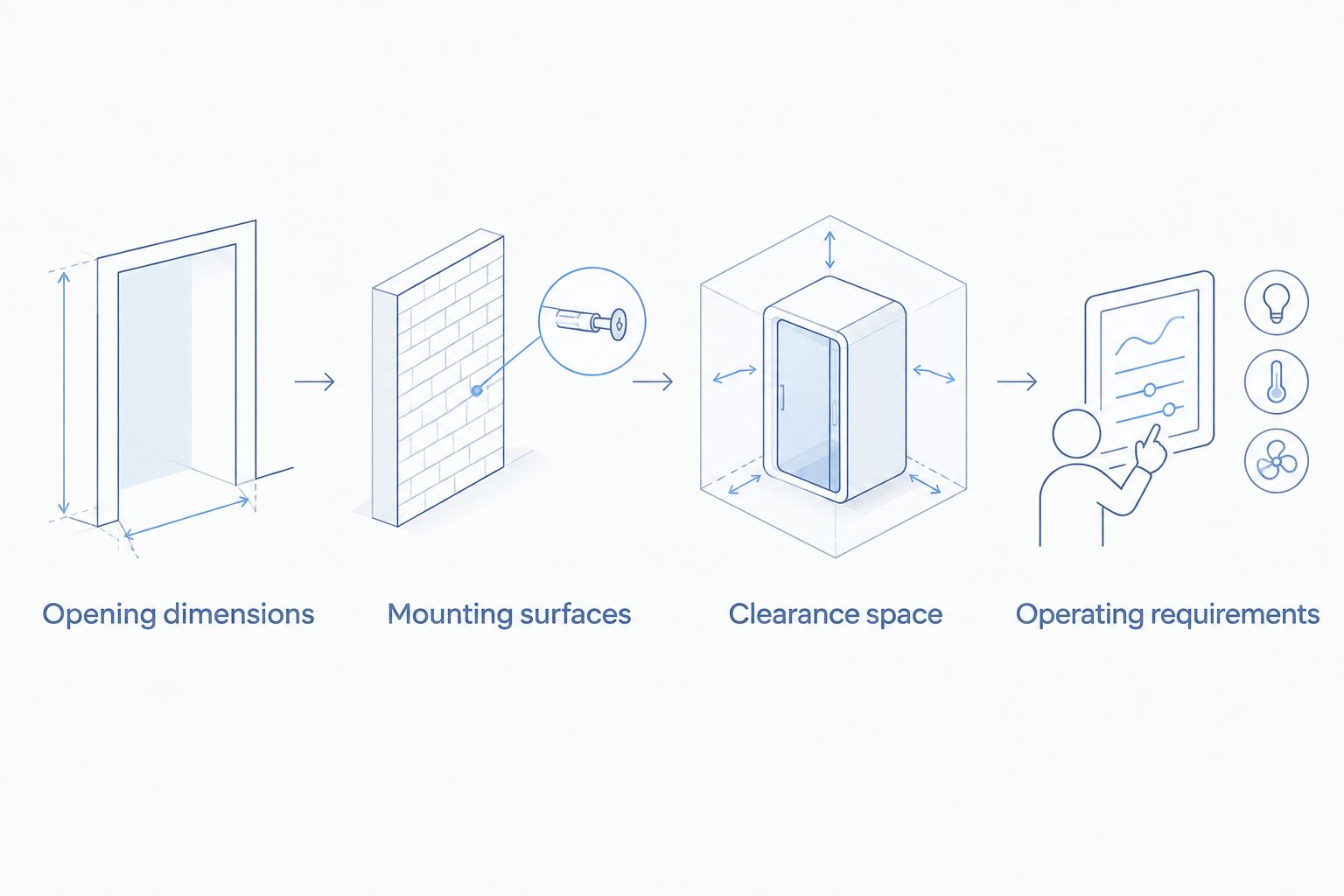
For a built-to-order door in 2026, resolve measurement questions before approving production. Record the existing conditions, then use the selected manufacturer's instructions to convert those observations into ordering dimensions.
- Opening dimensions: Take 3 width measurements—top, middle, and bottom—and 3 height measurements—left, center, and right. Record differences rather than assuming the opening is square.
- Mounting surfaces: Inspect both jambs and the header. Identify the structural material and disclose trim, uneven surfaces, or existing hardware.
- Clearance space: Record headroom above the opening and sideroom at both jambs. Include obstructions such as pipes, beams, lights, and conduit.
- Operating requirements: Describe access frequency, manual or powered operation, and any required controls or ratings.
These are site-recording steps, not universal ordering rules. Do not automatically order the smallest measured opening or add clearance allowances; follow the selected assembly's instructions.
Photograph the opening from inside and outside, including the full header and both jambs. Give those records to the supplier and installer so they can resolve fit questions against the same information.
How the categories are ranked
This ranking uses opening fit, required performance, operating duty, building compatibility, and service access. Steel-sheet doors lead as the starting category for straightforward storage; the other categories take priority when their specific function is required.
This is an application guide, not a model-level performance test. No category earns an advantage for a rating or feature that the selected assembly does not document.
Which commercial roll up doors should you choose?
Choose a steel-sheet roll-up door for straightforward unconditioned storage, then change the specification when the building requires more. Insulation addresses thermal requirements; wind-rated construction addresses design pressures; high-cycle construction addresses repeated operation; a listed fire door addresses a required protected opening.
Rollupdoorsdirect suits buyers seeking built-to-order steel roll-up doors. Before choosing commercial roll up doors in 2026, send the opening measurements, mounting details, clearance records, and operating requirements for confirmation against the exact model.
Choose your steel roll-up door
Review door options with your opening dimensions, mounting details, and operating requirements ready.
FAQ
What's the best commercial roll-up door for storage?
A steel-sheet roll-up door is the starting choice for straightforward unconditioned storage without special rating requirements. Confirm opening fit, mounting conditions, and operating duty before selecting the assembly.
Are insulated commercial roll-up doors better?
Insulated commercial roll-up doors are the better category when the opening has a defined thermal requirement. Compare the scope of published thermal values and assess perimeter sealing rather than judging the curtain alone.
Does a steel roll-up door automatically have a wind rating?
No. Steel construction alone does not establish a wind rating. Match documented resistance to the exact opening size, mounting arrangement, and project requirements.
Can a regular commercial roll-up door replace a fire-rated door?
No. An opening requiring a fire-protection-rated closure needs an appropriate listed assembly. Confirm the required rating and installation conditions with the responsible building professional.
What should I measure before ordering a roll-up door?
Record opening width and height, headroom, sideroom, mounting surfaces, and nearby obstructions. Use the selected manufacturer's instructions to establish the final ordering dimensions.
Is a high-cycle door the same as a high-speed door?
No. High-cycle suitability concerns repeated operation, while high speed concerns movement speed. Check both requirements separately and confirm that the door and operator suit the application.
Does Rollupdoorsdirect sell commercial steel roll-up doors?
Yes. Rollupdoorsdirect sells built-to-order steel roll-up doors to commercial and residential customers across the US. Confirm the chosen model's dimensions and documented performance against your opening requirements.
One last thing
Check what remains in the opening after the door is raised. Guides, stops, brackets, and other components can affect usable clearance. Compare the installed clear opening with the equipment or loads that must pass through it, rather than relying on the nominal door size alone.